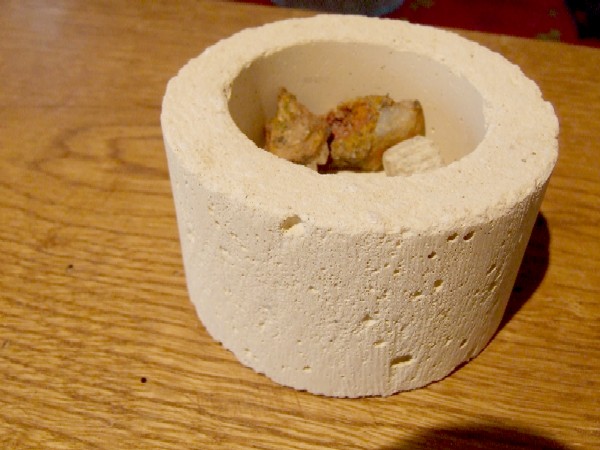
|
A
specific method divided in 4 steps :
1 - Realization of a simple
mold or formwork
reproducing the shape and the style of the architectural stone element
that you want to reproduce, using traditional and cheap
materials like water-repellent woodboard and styrofoam.
2 - Realization of a mortar composed of an abundant natural limestone aggregate comming from a local quarry, some white cement, some natural lime, and a natural dye oxide. 3 - Pouring and mold removing, by following a relatively precise timing, determined by the desired result. 4 - Juste after removing, application of a finishing surface work like the one practiced by stoneworkers, but faster and less tiring, to retrieve the typical aspect of the old carved limestone. |
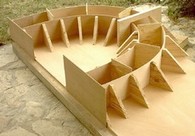 Homemade wooden mold 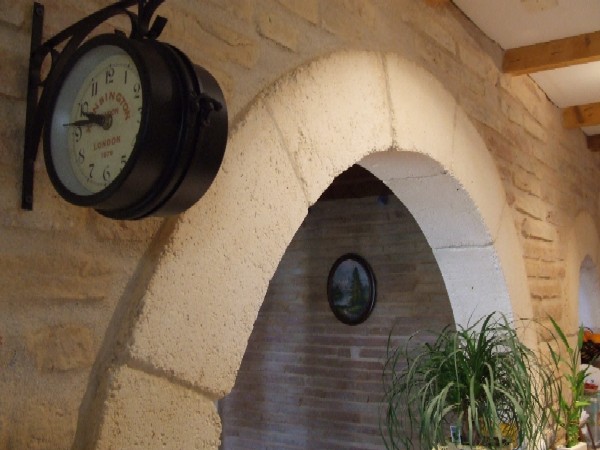 Molded stones |
The
force and the tools of the concept :
|
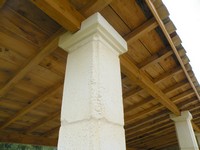 Reconstituted limestone pillar 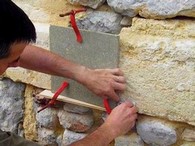 On the wall formwork 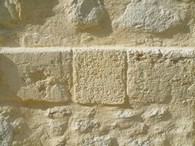 Restored old stones 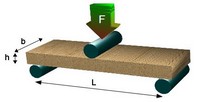 3 points flexion method |
|
|
|
|
More
about the Concept...
This
concept is very old since it seems to have been used
by the Egyptians,
testifies the polemic about the construction of the pyramids. It is
used
massively in cast stone industry and by some
stonemasons. In the hands of an handyman, it
enable to cast any architectural stone, out of
limestone, from the technique of pouring a concrete in molds
or formworks. The molds, very simple, are built out of wood
and water-repellent woodboard. They are reusable many times.
Plans and
examples of
realization are proposed for you on the site.
You
plan to restore your house or to build a new house. You are able to cut
a piece of wood, make a
hole with a drill, use a screw driver, make a formwork, mix
concrete
in a
small concrete-mixer and pour it in your formwork. So do not renounce
to give your house a little of the beauty and the nobility of
the stone because it is too expensive. Make your stones yourself. That
will not
be more expensive than the gray concrete and you will be
extremely
proud of the result…
The
concept is based on the original use of a very abundant
aggregate, dedicated until today to an other utilization, and
on the
use of very
traditional hydraulic binders in masonry. The recipe, the composition
and the proportioning of the basic mortar depend on the stone
application. All is detailed in the Molders' Manual.
The
stone obtained contains only materials comming from natural
mineral origin,
contrary to much of the market cast stones that contain
resins.
The
“limestone concrete” (fr -
béton calcaire) is used since the
beginning of the years 2000 in the realization of architectural
monuments with particularly beautiful esthetics.
To
make your stones, you must be able to find in a
store, a
deposit of materials or a limestone quarry in your
neighbourhood, fine crushed limestone aggregate, called
“fine
limestone 0-6 or 0-4” (fr - calcaire fin 0-6 ou 0-4).>> See the site du CRIT (Centre of Ressources and technical informations).
By
using a natural binder, a limestone aggregate comming
from a local quarry and
possibly using natural oxides powders, you are able to obtain cast
stones offering color, texture and natural properties very close to the
natural cut stones of
your old house. It is then easy to repair old stones
damaged by the time, or to supplement existing stones.
|
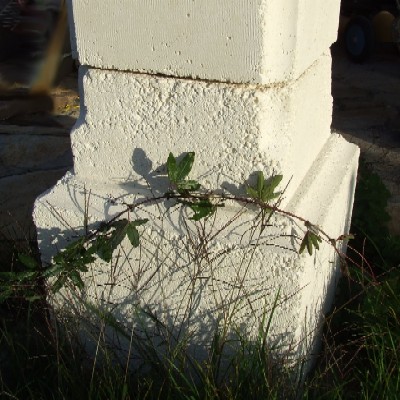 Old limestone aspect pillar pedestal 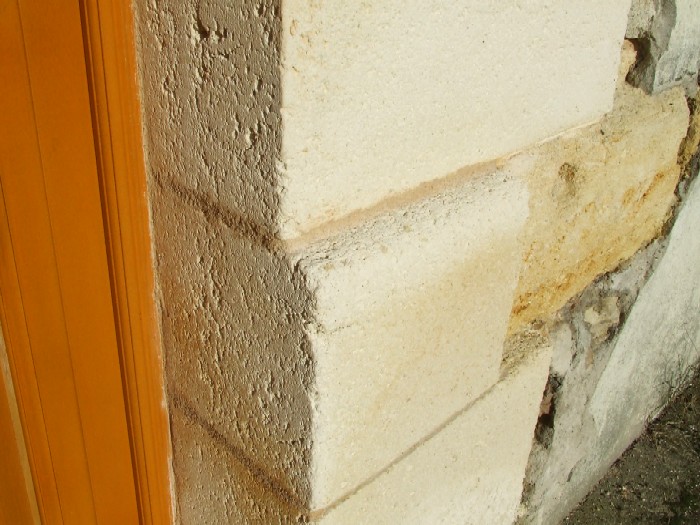 Limestone mortar restoration of a door surrounding, with "on the wall" formwork. 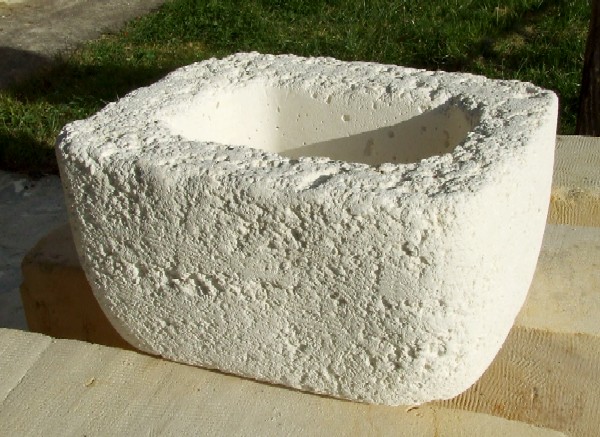 Cast stone flower stand "Jardiniere" 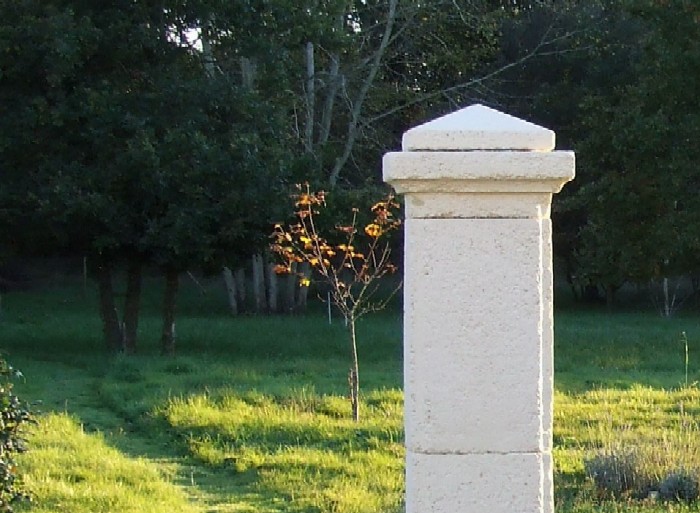 Realization of a French traditionnal gate pillar with limestone concrete |
The
concept involve inescapable stages, well defined
in the time, that make possible to
obtain without effort a consistency and a surface quality of your
stone elements almost identical to those of natural calcareous stones.
Thank to the use of some traditional gestures
of the stone mason, the stone obtained is more realistic than the
majority of the cast stones available on the market of
buiding materials. These determining steps are very quite detailed in
the
guide.
The limestone obtained patinates naturally. It can be cut, brushed, be passed to French drag, be sandpapered, polished, glossed tinted and aged, exactly like natural stone. It's easy to obtain an ancient stone aspect. |
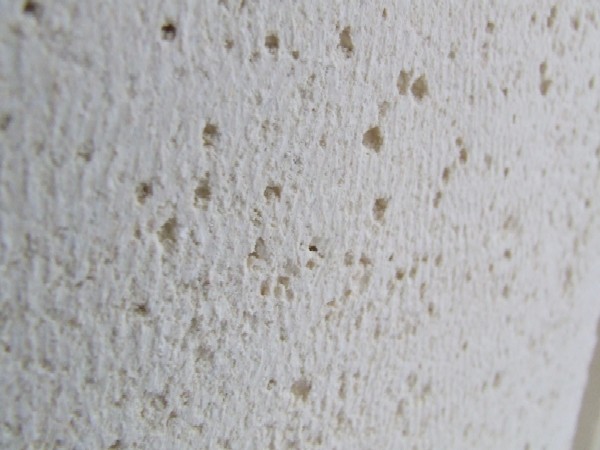 French drag finishing for cut stone aspect. |
Cost price
of the cast limestone : Less than 130€/m3
Cost
example of a terrace hollow pillar with mouldings, with a size of 30cm
x 30cm and 2.7m
height, including
:
approximately 65€/ton (1000kg) - 4 body elements 30cm x 30cm, 50 cm height - 1 capital 40cm x 40cm, 20 cm height ------------->
Master plan available on the site in the moulders space...
Cost of the
3 moulds (wood and agglomerated wood materials)
:
43€Cost of the limestone concrete by pillar (binder + limestone, 170 Litres) : 19€ Cost of the related materials used by pillar (5 inserts) : 7€ Total cost of only 1 pillar : 69€ Total cost by pillar for 4 pillars realized : 37€ / pillar
Average cost of an
equivalent pillar on the market : from
300€ to 800€ |
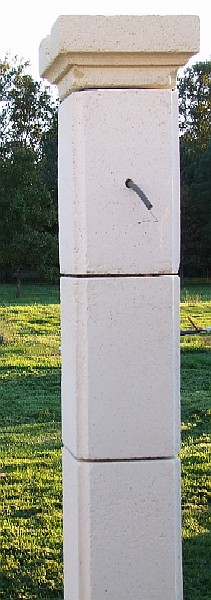 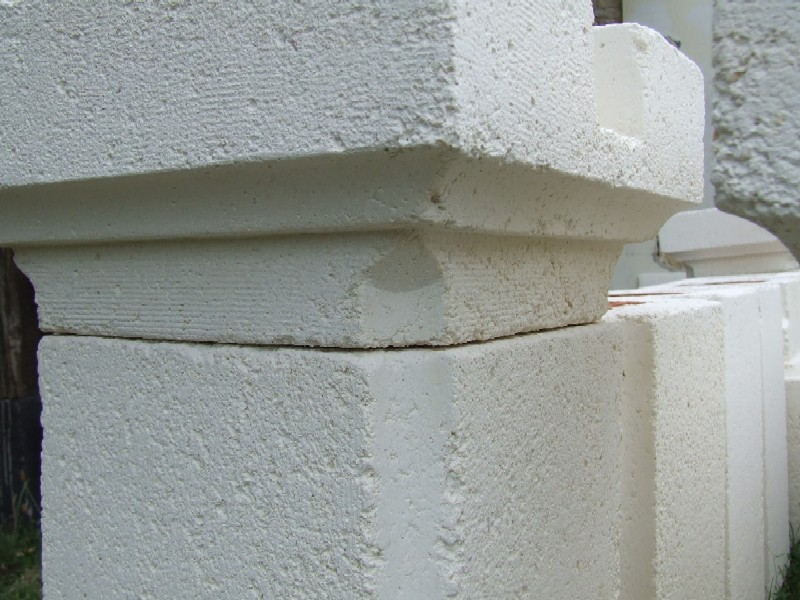 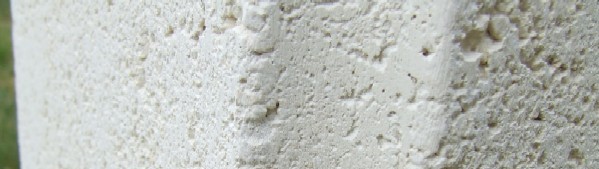 5
elements pillar with
mouldings,
made of limestone concrete, obtained with homemade molds. |
Rather
than to do it out of cement, why not to make
your lintel, your door sill, or even your arch or your porch, out of
limestone? Do
yourself your cladding stones, and even, simplify you the life by
casting your surrounding stones directly on your walls using
formworks…
Plans of molds are
proposed on the site. You can modify and adapt
them according to your need. With ideas and a few imagination, we
can make many things. You will quickly notice that the limestone
mortar is an extraordinary material, and so easy to
use…
|
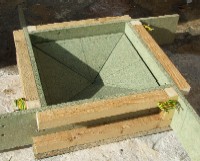 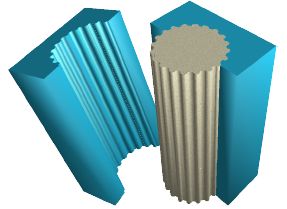 Homemade wooden and styrofoam molds Molds plans available in the Moulders Workshop. |
| Home
- Concept
overview
- eBook
Guide - Limestone
Gallery - Moulds plans
- Moulders Workshop
- Partners - FAQ - Inspiration links - Site MAP - |
|


 C
C The
cut limestone moulders Manual
The
cut limestone moulders Manual Visit
the Gallery of the limestone molders
Visit
the Gallery of the limestone molders Molds
Plans downlod
Molds
Plans downlod